
PPC campaigns often look like a quick win. You launch your ads, traffic starts coming in, and it feels like things are moving in the right direction. Then the results stall. The leads are inconsistent, the costs creep up, and it becomes difficult to see a clear return.
That is where most businesses start to lose confidence in Google Ads. It is not that PPC advertising does not work. It is that many campaigns are set up in a way that quietly wastes budget without generating the right kind of enquiries.
In this guide, we’ll break down why PPC campaigns fail and what you can do to fix them before more ad spend is lost.
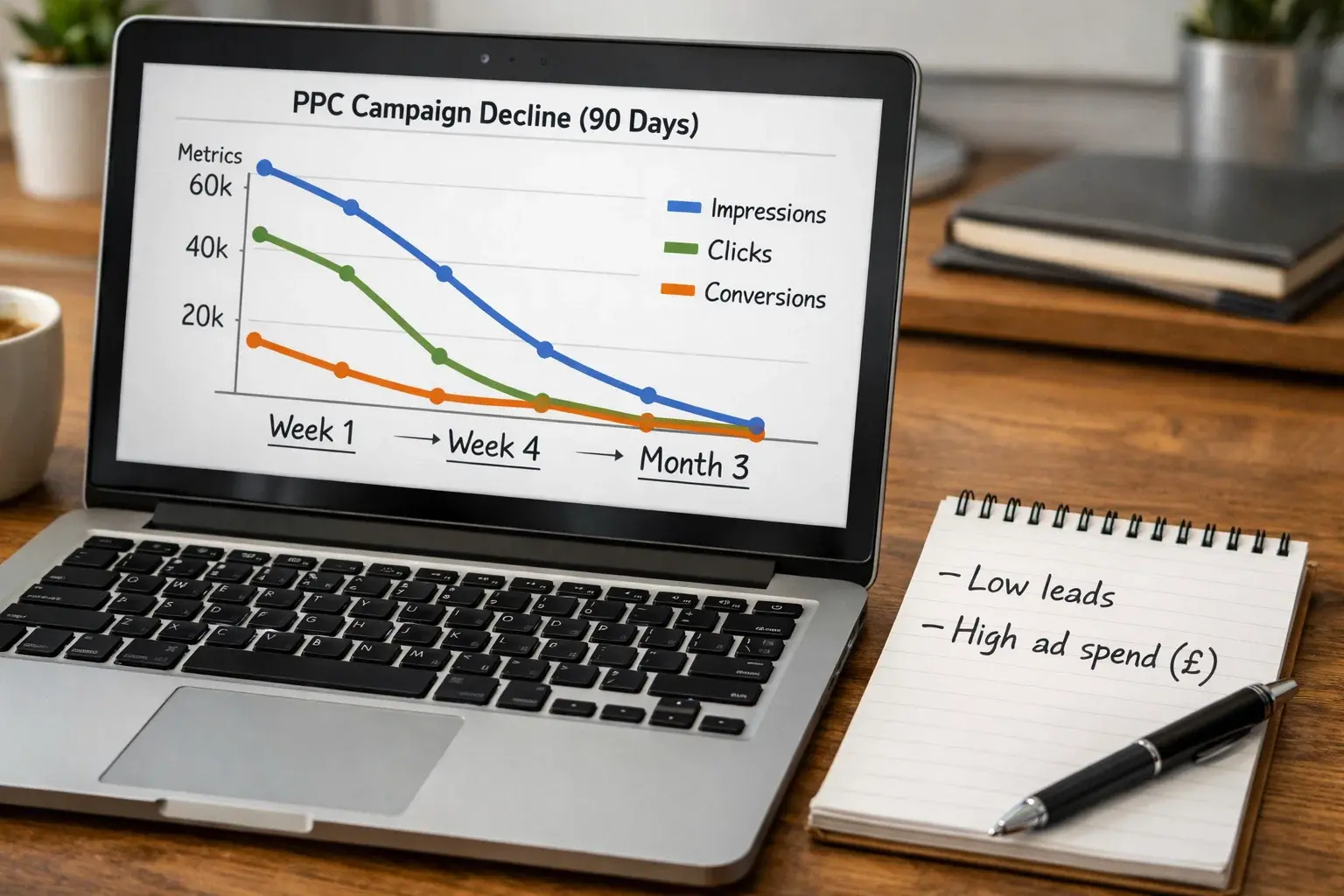
Why Most PPC Campaigns Fail Within the First 90 Days
Most PPC campaigns do not fall apart straight away. In fact, they often look like they are working at the beginning. You see clicks coming in, impressions ticking up, and activity inside your Google Ads account. It gives you just enough confidence to keep spending.
Then things start to feel off. The leads are either poor quality or do not come through at all, yet the ad spend keeps climbing. At that point, it becomes clear something is not quite right. In many cases, PPC ads are simply showing in the wrong search results or reaching people who were never likely to convert in the first place.
Poor Keyword Targeting Leads to Wasted Ad Spend
Keyword targeting is where a lot of PPC campaigns start to go wrong, even when everything else looks fine. It is easy to load a Google Ads account with what seem like the right terms, especially if they are relevant on paper. The issue is that relevance alone does not guarantee intent, and that is where ad spend starts slipping away.
A common mistake is going too broad. Without tight keyword research or proper use of negative keywords, PPC ads can appear for searches that are only loosely connected to the service being offered. That means clicks come in, but they do not lead anywhere. Over time, that wasted traffic affects campaign performance, lowers quality score, and makes it harder to get consistent results from paid search campaigns.
Weak Ad Copy That Doesn’t Convert Clicks into Leads
Getting clicks is one thing, but turning those clicks into enquiries is where most PPC campaigns struggle. A lot of PPC ads look fine at a glance. They mention the service, include a keyword, and show up in the search results. The problem is they do not give people a strong reason to choose that ad over the others around it.
In many cases, the ad copy is too generic. It speaks to everyone instead of the right target audience, which leads to low click through rate and poor engagement. Even when people do click, there is often a disconnect between what the ad promises and what the landing page delivers. Over time, this weakens campaign performance and makes it harder to get consistent results from your PPC advertising.
Landing Pages That Kill Conversion Rates
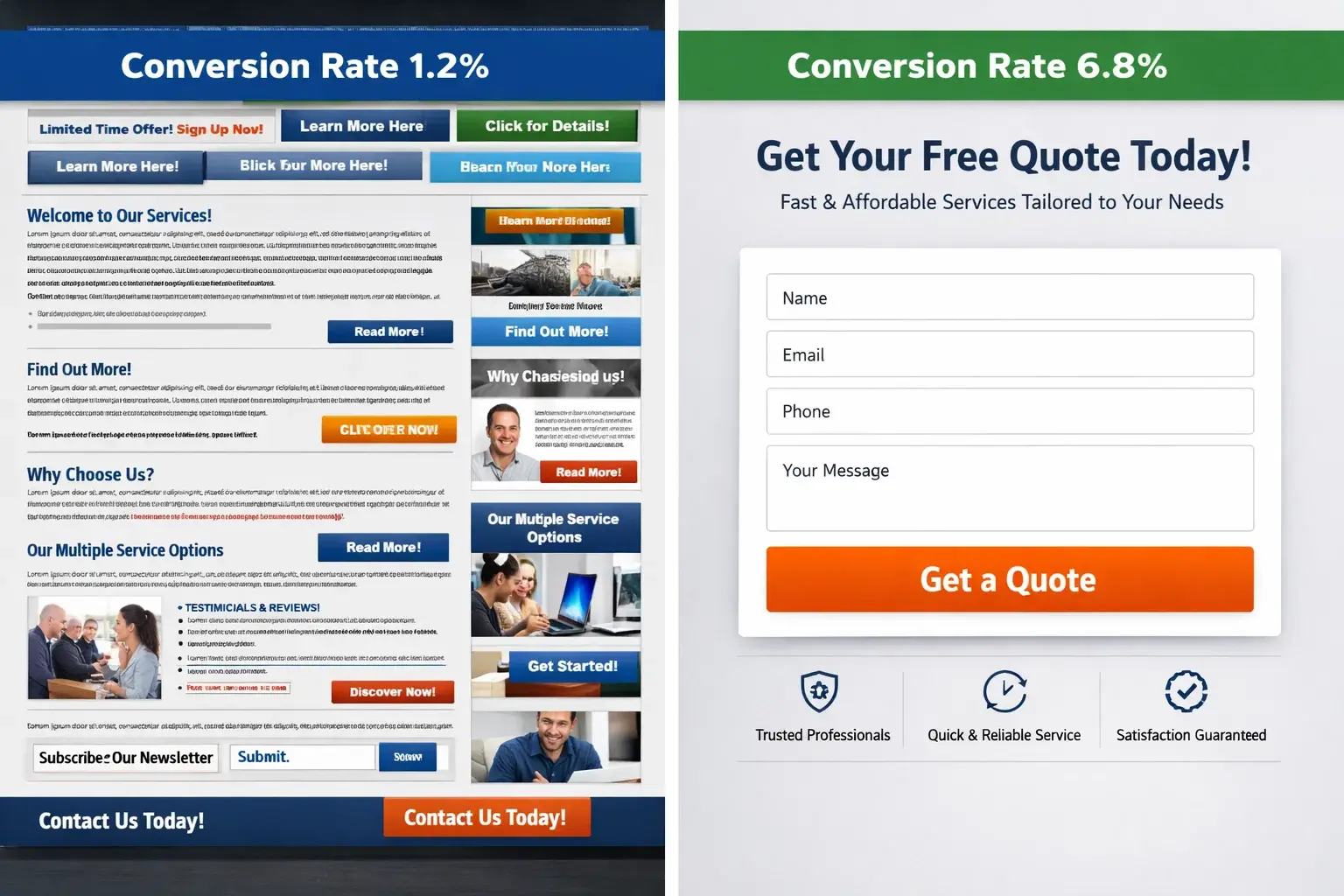
This is where a lot of PPC campaigns quietly fall apart. You can get the targeting right and still see poor results if the landing page does not pull its weight. People click through, take a quick look, and then leave. It happens fast, and most businesses never really see it happening.
Often it is not one big issue. The page just does not feel convincing. It might be slow, a bit unclear, or not quite match what the ad promised. Sometimes the next step is not obvious, so people do nothing. That drop in conversion rate feeds back into the wider PPC campaigns and pushes costs up over time. Fixing that one page can make a bigger difference than changing anything inside the Google Ads account.
No Proper Tracking or Conversion Data
This is where things get a bit messy for a lot of businesses. The campaign is running, clicks are coming in, but no one is completely sure what those clicks are actually doing. You might see activity in your Google Ads account and assume it is working, even if the phone is not ringing or enquiries are inconsistent.
The problem is that without proper tracking, it is all guesswork. You can end up putting more ad spend behind the wrong keywords or ad groups without realising it. Google Analytics can help, but only if it is set up in a way that actually shows what is happening after the click. Once you can see which parts of your PPC campaigns are leading to real enquiries, it becomes much easier to focus on what is worth keeping.
Lack of a Clear PPC Strategy
This is one of those issues that does not always stand out straight away. A campaign can be live for weeks and still look fine on the surface. Clicks come in, ads are running, and nothing seems obviously broken. That is usually why it gets missed.
Then you start digging into it. The structure is not quite right, ad groups overlap, and different parts of the campaign are almost competing with each other. Changes get made, but they are not always based on anything solid. Without a clear PPC strategy, it becomes difficult to tell what is actually improving things and what is just adding more noise.
Set and Forget PPC Campaign Management
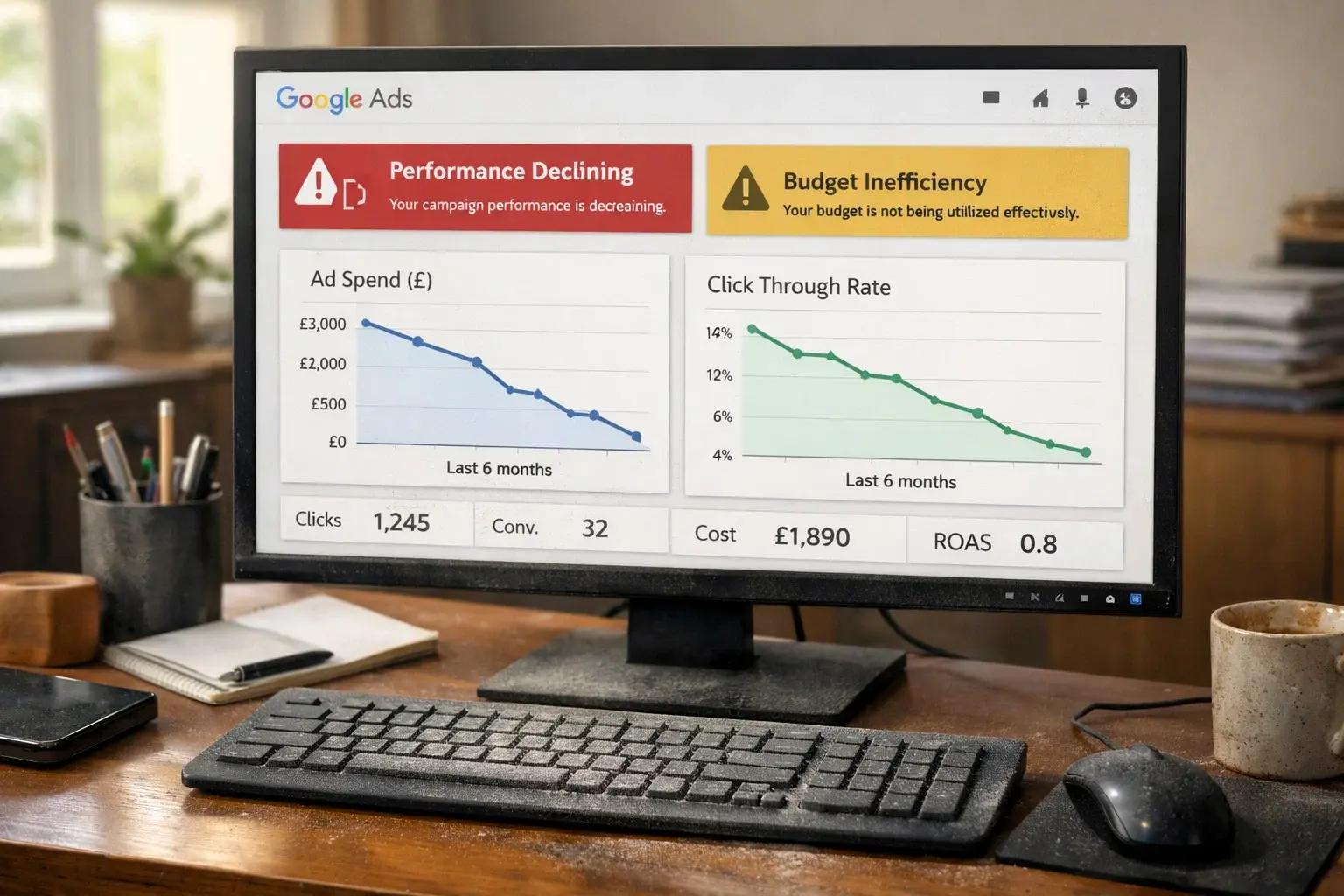
This happens more than people realise. A campaign gets built, goes live, and then it just runs. There is a quick check here and there, but nothing consistent. Since the ads are still showing, it feels like it is doing its job.
Then the results start to feel off. Not terrible, just not as good as before. Leads slow down, costs edge up, and it becomes harder to tell what has changed. Most of the time, nothing obvious has broken. It has just been left too long without proper attention, and the campaign has drifted away from where it started.
How to Fix Your Failing PPC Campaign
Fixing PPC campaigns is not usually about one big change. It tends to come down to going back through everything and tightening it up properly. That might mean refining keyword research, cutting out wasted spend with negative keywords, or rebuilding ad groups so they actually make sense. Small changes in the right places can shift results quite quickly.
The same goes for ad copy and landing pages. If the message is not clear or the next step is not obvious, people will not convert. Improving those parts often has more impact than adjusting bids or budgets. Once the structure is right and the data is clear, it becomes much easier to optimise PPC campaigns over time instead of constantly reacting to problems.
When to Fix It Yourself vs Hiring a PPC Agency
Some businesses do try to handle PPC campaigns themselves, especially early on. It can work for a while. You make a few changes, watch what happens, and learn as you go. If the setup is simple, it is manageable.
It gets more difficult once things start to grow. More keywords, more ads, more competition. At that point, it is not always clear what is helping and what is wasting budget. That is usually where people start looking for help, not because PPC is not working, but because it becomes harder to manage properly on your own.

Turning PPC Campaigns into a Consistent Lead Source
When PPC campaigns are set up and managed properly, they stop feeling unpredictable. You are not guessing what might work next or reacting to drops in performance. Instead, you start to see patterns. Certain keywords bring in better leads, certain ads perform more consistently, and the overall direction becomes clearer.
That is when things start to feel more stable. You are not just getting clicks, you are getting the right kind of traffic. Over time, that builds into something you can rely on. PPC campaigns will always need attention, but with the right structure in place, they can become a steady source of enquiries rather than something that constantly needs fixing.
If your campaigns are not performing the way they should, it might just be a case of tightening things up in the right places. At Rank Kings, we spend a lot of time doing exactly that. Looking at what is already there, cutting out what is not working, and helping businesses turn their PPC campaigns into something that actually delivers results.


